
Client build · · 4 min read
Building crowcrowcrow end to end: an import store for India
How we built crowcrowcrow.com, a store that brings genuine products from the USA to Indian buyers: the storefront, the operations behind it, GST-ready orders and a public MCP server for AI agents.
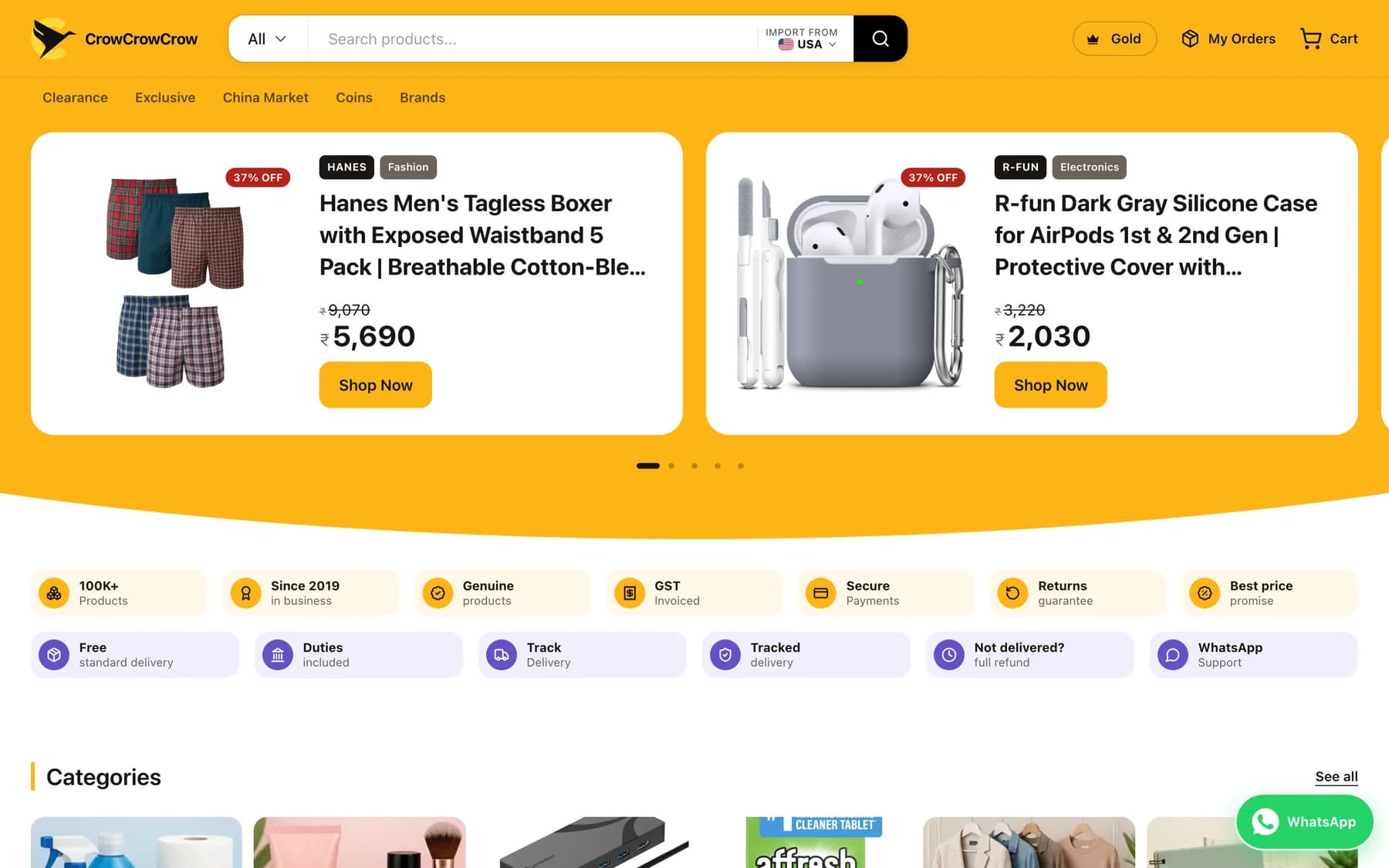
crowcrowcrow.com sells genuine imported products from the USA, and from China, to buyers in India. You pay in rupees, the price already includes customs duty, and the order arrives at your door with a GST invoice. Bluehans built the platform behind it: the store customers see and the systems the team uses to run it.
This is how that build fits together, and what we would tell anyone planning a cross-border store.
Bluehans built our entire ecommerce ecosystem at incredible speed. From the customer-facing website to complex backend systems handling orders, inventory, product catalogs, and procurement, they delivered a seamless, integrated solution.
The problem the store solves
Buying a US product from India on your own is hard work. You need a US card or a forwarding address, you fill in customs forms, and the final cost is a surprise until the parcel lands. crowcrowcrow takes all of that away. It sources the product from authorised US retail, ships it to India, clears customs in its own company name and delivers it. The buyer sees one all-in price in rupees, and can even pay cash on delivery.
If something isn't listed, buyers can send a product name or a store link on WhatsApp, and the team checks whether it can be sourced and quotes the all-in Indian price.
That promise puts a lot of work behind the scenes. Every product page has to show a fair rupee price, the right tax, a delivery estimate and accurate details, across a very large catalog.
What we built
- The store customers see: browsing, search, cart, checkout, payments, order tracking, invoices, reviews and the help pages.
- The operations behind it: the tools the team uses to run the catalog, keep rupee prices current, manage orders and handle sourcing requests.
Both sides were designed and built together, so a change the team makes in operations shows up correctly in the store, and a busy checkout never gets in the way of the team's work.
GST-ready from the first order
Selling imports in India means getting tax right on every invoice. Every order comes with a GST invoice, and it always shows exactly what the customer paid.
Business buyers can add their GSTIN and company name at checkout, so the same store serves people and companies. Orders ship through Bluedart, Delhivery and India Post with tracking.
Found by search engines and by AI agents
A store this size lives on search. New and updated products are submitted to search engines automatically as they are published, so they get crawled without anyone asking.
We also built a public, read-only MCP server for the store. MCP (Model Context Protocol) lets AI assistants such as Claude, ChatGPT, Cursor and Perplexity search products, browse categories and read the store's guides through structured tool calls, with no API key and no scraping. As more shopping questions start in an AI assistant, the store can answer them directly.
What we'd tell you before you build a store like this
- Design the store and the operations together. What your team runs decides what customers see.
- Get tax right on every invoice. Buyers, and business buyers most of all, notice.
- Build for AI search now. A small MCP server is cheap to add and makes your catalog readable to the assistants your buyers already use.
Building something similar?
We build e-commerce platforms like this one, from the storefront to the operations behind it. See our e-commerce work and other client stories, or start a project with us.